The Value of Mentorship in Basketball Club Teams San Diego
Talent gets attention fast in youth basketball. A player who can score in traffic, defend multiple positions, or change the pace of a game will always stand out. But anyone who has spent real time around club programs knows talent alone rarely carries a young athlete as far as people expect. The players who hold up over time, who keep improving, who handle setbacks without folding, usually have something else in place. They have mentorship.
That is especially true in competitive environments like Basketball Club Teams San Diego, where the level of play can be strong, the calendar gets crowded, and families often juggle school, travel, training, and recruiting conversations earlier than they should. In that setting, mentorship is not a soft extra. It is part of player development. It shapes decision-making, confidence, discipline, and perspective, often long before the box score catches up.
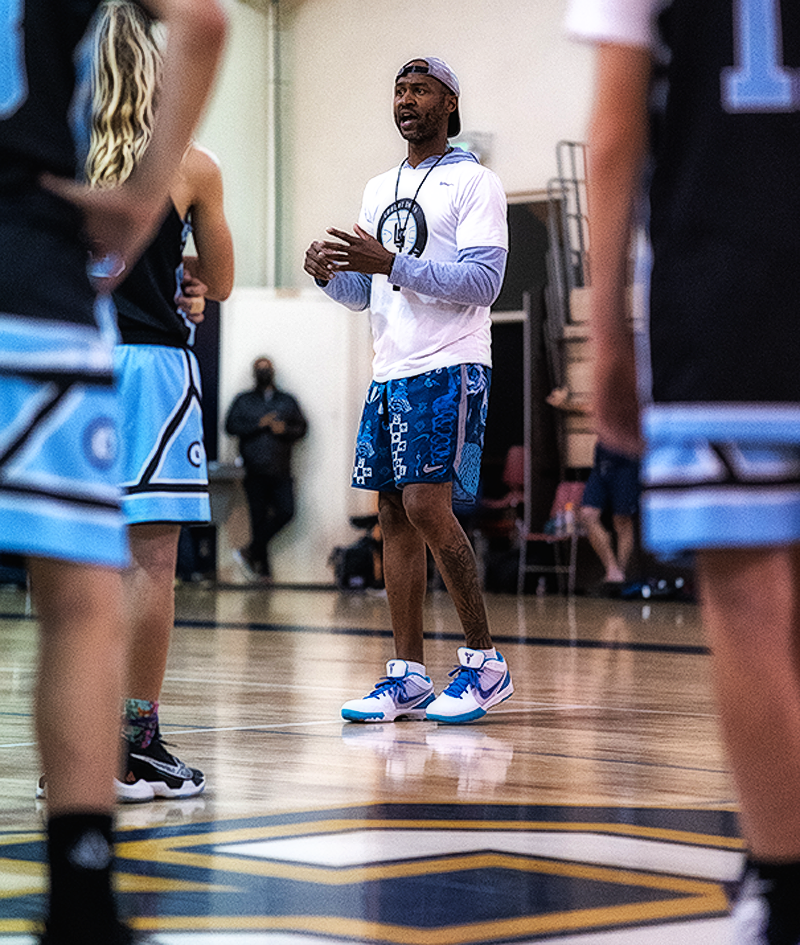
When people hear the word mentorship, they sometimes picture dramatic heart-to-heart talks in a gym after practice. Those moments happen, but most mentorship is quieter than that. It shows up in a coach pulling a player aside to explain why body language matters. It appears when an older teammate teaches a younger guard how to recover after a bad turnover. It can even come from a trainer who sees that a player is physically capable but mentally rushing every rep. Mentorship is guidance with context. It helps a young athlete connect effort to outcome, and it gives them a model for how to carry themselves when things get hard.
Why club basketball creates a real need for mentorship
Club basketball offers excellent opportunities. Players see different styles, stronger competition, and more exposure than they often get in a standard school season. That can accelerate growth. It can also create pressure that younger athletes are not fully equipped to manage alone.
In San Diego, club teams draw players from varied neighborhoods, school systems, and family backgrounds. Some athletes are trying to earn varsity minutes. Some are aiming for college recruitment. Some are simply looking for the best developmental setting after outgrowing local recreational leagues. Put all of those motives into one gym and you get ambition, which is good, but also comparison, impatience, and anxiety.
A mentor helps a player interpret that environment correctly. Without guidance, a 14-year-old may think a smaller role means they are failing. A parent may see limited minutes and assume the coach has no plan. A player on the edge of a growth spurt may get frustrated when coordination temporarily slips. These are normal phases, but they feel personal in the moment. Good mentorship keeps temporary problems from becoming identity problems.
I have seen skilled players drift because nobody explained what their next step really was. One player could score from everywhere but took difficult shots early in the clock because no one had ever shown him the difference between being a volume scorer and being an efficient one. Another had terrific defensive instincts but lost confidence when stronger players attacked her body. She did not need hype. She needed a mentor to explain leverage, angles, and how to respond after contact. Once someone framed those details for her, she settled down and improved quickly.
That is the real value. Mentorship gives players a way to make sense of development, not just experience it.
The best mentors develop the person and the player at the same time
A strong club coach teaches footwork, spacing, timing, and defensive principles. A strong mentor teaches responsibility, composure, and honest self-assessment. In the best basketball settings, those jobs overlap.
Young athletes often separate performance from character because adults around them do. They hear constant talk about points, rankings, shoe circuits, and highlight clips. Then they are surprised when coaches care deeply about punctuality, communication, and reactions to adversity. Experienced mentors know that these things are linked. A player who cannot handle correction rarely reaches technical mastery. A player who blames teammates after mistakes usually plateaus, because blame gets in the way of learning. A player who shows up unprepared for practice tends to make emotional decisions late in games.
In Basketball Club Teams San Diego, where competition for court time can be real, mentors help players understand that trust is earned in layers. Coaches trust players who listen, adjust, and stay engaged even when they are not the focal point. Teammates trust players who defend, rotate, talk, and celebrate the right things. College coaches, when they watch club events, are often evaluating those habits just as much as scoring output.
That can be a hard message for families who understandably want visible results. Most parents can recognize a made three or a chasedown block. Fewer can easily measure whether a player is maturing in practice habits or emotional stability. Mentorship helps bridge that gap. It explains why growth is not always immediately visible from the bleachers.
Confidence is built through truthful guidance, not empty praise
One of the most misunderstood parts of youth development is confidence. People often try to build it by protecting players from discomfort or by offering constant reassurance. That approach usually produces fragile confidence, the kind that disappears after one rough weekend.
Real confidence is sturdier. It comes from knowing exactly what you can do, what still needs work, and what process will close the gap. Mentors are critical here because they tell the truth without crushing the athlete. They do not inflate. They do not shame. They calibrate.
A seasoned mentor might tell a wing player, “Your shot is good enough to punish late closeouts, but right now your handle breaks down when defenders sit on your right hand. Let’s fix that over the next eight weeks.” That message creates direction. It does not label the player as limited. It gives them a plan.
I have watched players respond dramatically to that kind of honesty. One guard in a club setting had spent months hearing vague praise about being “such a natural scorer.” She loved the compliment, but her game was stalled. A mentor finally showed her clips of her drives, pointed out that she never changed speed, and gave her simple read-based options out of ball screens. The result was not instant stardom. It was better than that. She stopped guessing. Her confidence rose because her choices improved.
This matters in a city like San Diego, where players can bounce between trainers, school coaches, club coaches, and social media influences. Without mentorship, they often collect advice that does not connect. One person tells them to be aggressive. Another tells them to slow down. Another wants more shooting reps. Another emphasizes strength. A trusted mentor helps sort signal from noise.
Mentorship protects players during the awkward middle stages of growth
Most young athletes are not stars or beginners. They live in the middle. That is where development gets complicated.
The beginner receives patience because everyone understands they are learning. The standout receives attention because results are obvious. The middle player often gets the least clarity. They are good enough to compete, not polished enough to dominate, and constantly measuring themselves against teammates who are ahead in one area or another.
This is where many club players either toughen intelligently or lose heart. Mentorship heavily influences which direction they go.
A player in the middle needs someone to identify what type of middle they are in. Are they physically behind but highly skilled? Are they athletic but tactically raw? Are they dependable but too passive? Are they capable but inconsistent because confidence swings with every game? These distinctions matter. The right mentor sees them early.
For example, a late-blooming forward may look ordinary at 15 because others are stronger and more explosive. An impatient environment writes that player off. A mentoring environment teaches screening angles, rebounding leverage, https://maps.app.goo.gl/7JhtuC7NJ8yByuuM9 defensive communication, and touch around the basket while the body catches up. A year later, that same player can become invaluable. It happens more often than outsiders realize.
Club basketball can be unforgiving because tournaments compress judgment. A coach watches a player for two games and forms an opinion. A family compares one weekend’s minutes against another. A mentor zooms out. They remind everyone that development is seasonal, not hourly.
Older players often become the most believable voices in the gym
Coaches matter. Parents matter. But older teammates have a special kind of credibility. They are close enough in age to feel relatable, yet experienced enough to model what the path looks like.
In healthy club programs, mentorship is not limited to the staff. It moves through the roster. Veterans show younger players where to stand during dead balls, how to communicate on switches, how to warm up with purpose, and how to reset after getting beat. They also normalize the emotional side of the game. A younger player may think they are the only one who gets nervous before a showcase event. Hearing an older player say, “Everybody does, here’s how I handle it,” can change everything.
This peer mentorship is especially valuable in Basketball Club Teams San Diego because many players are navigating transitions at once. They may be changing schools, growing physically, competing for new roles, and trying to understand the recruiting landscape. An older player who has already lived those steps can make the path feel manageable.
I remember watching a high school aged point guard quietly take ownership of this role. After practice she would stay with the younger guards for ten extra minutes, not for dramatic speeches, but for practical reminders. She would ask what they saw on certain actions, explain how to get a teammate into the right spot, and talk through mistakes without embarrassment. None of that showed up on a stat sheet. Yet over the season, those younger guards played calmer and smarter. That is mentorship at work.
The parent-coach-mentor balance requires judgment
Mentorship in club basketball gets complicated when roles blur. Parents want to support. Coaches want to lead. Trainers want to help. If everybody speaks at once, the player gets buried in instruction.
The best setups create alignment. The mentor, whether that is the coach or another trusted adult, does not try to dominate every part of the athlete’s life. They narrow the message. They decide what matters most right now. Sometimes that means resisting the urge to fix everything.
A 13-year-old does not need a weekly seminar on recruiting. A 16-year-old in a shooting slump does not need five adults debating mechanics in front of them. A player returning from reduced minutes may not need more criticism, they may need help rebuilding rhythm and confidence through smaller goals.
Families should also understand that effective mentorship is not always comfortable. A real mentor may ask a player to confront habits that the family has unknowingly enabled. That could mean arriving earlier, accepting a lesser role without sulking, defending harder, or limiting outside noise. Honest mentorship sometimes sounds stricter than people expect. But when delivered with consistency and care, it serves the player well.
The opposite problem exists too. Some adults use the language of mentorship when they are really pushing their own agenda. They overpromise exposure, flatter players to gain loyalty, or stir frustration with coaches rather than helping the athlete communicate productively. That is not mentorship. That is interference.
What mentorship looks like on an ordinary week
The most effective mentoring relationships are rarely dramatic. They are built through repetition and credibility.
A mentor notices that a player stops talking on defense after a bad offensive stretch and addresses it before the habit hardens. A mentor asks why the athlete looked distracted at practice and learns there is school stress in the background. A mentor gives a player one specific focus for the weekend, maybe rebounding position or shot selection, instead of flooding them with ten corrections. A mentor follows up after a rough tournament rather than disappearing until the next one.
These small acts matter because club basketball is full of emotional swings. Players can feel excellent on Friday, invisible on Saturday, and determined again by Sunday evening. Without a steadying influence, they start overreacting to every performance. Mentorship introduces continuity. It gives them a through line.
In practical terms, that might mean a mentor helping an athlete separate three questions after each event. What did you do well? Where did your habits slip? What is the next priority? Those are simple questions, but they promote growth better than either praise alone or criticism alone.
The San Diego basketball landscape makes character guidance even more important
San Diego has a strong basketball community, but like many talent hubs, it also contains distractions. Players see highlights online, hear rumors about which club is “best,” and sometimes chase the appearance of progress rather than progress itself. Exposure becomes a buzzword. Switching teams can seem like a shortcut. Private training can become performative if it is not connected to real game habits.
Mentorship helps players resist those traps.
A mature mentor will tell an athlete that visibility without readiness can backfire. They will explain that joining a higher-profile team means little if the player is not prepared to compete for a role. They will remind families that the right environment is not always the flashiest one. Sometimes the best club team for a player is the one where coaching is clear, accountability is steady, and development is taken seriously.
That point deserves emphasis in conversations about Basketball Club Teams San Diego. The market offers options, and options can be helpful. But choice without criteria leads to confusion. Mentorship gives families criteria. Is the player being taught? Are they improving in ways that transfer to games? Does the environment reward discipline? Are older players setting a healthy example? Is communication honest? Those questions matter more than branding.
When mentorship changes the outcome entirely
There are moments when mentorship does more than improve performance. It keeps a player in the game.
Almost every club coach who has been around long enough can think of athletes who nearly walked away at the wrong time. Some were buried on the bench for a Basketball Club Teams San Diego season. Some hit physical changes that made them feel clumsy. Some lost confidence after moving up an age group. Some simply got tired of the pressure.
Often what brought them back was not a tactical adjustment. It was a person who saw them clearly and refused to let a temporary struggle define them.
I have seen players go from considering quitting to becoming foundational team pieces because one mentor gave them perspective and structure. Not a miracle, not a motivational cliché, just patient guidance. Better routines. Clearer goals. Honest feedback. A reason to stay with the process long enough for the work to show.
That is part of why mentorship deserves more attention in youth basketball discussions. People love to debate systems, rankings, and tournament schedules. Those things matter. But the human relationship between mentor and athlete often determines whether the player can actually benefit from the opportunity in front of them.
What families should pay attention to when choosing a club environment
The easiest thing to evaluate is wins. The hardest thing, and often the most important, is the developmental culture underneath them.
When families look at club programs, they should listen closely to how coaches talk to players after mistakes. They should notice whether correction comes with teaching. They should observe how older players interact with younger ones. They should ask whether the staff can describe a development plan beyond generic promises. A program with real mentorship usually reveals itself in the small details. Players are engaged. Feedback is specific. Standards are consistent. The environment feels demanding, but not chaotic.
Families should also remember that mentorship is relational. The best mentor for one athlete may not be the best one for another. Some players need firmer structure. Others need steadier encouragement. Some respond to direct critique. Others need space to process before they can hear it. Good club programs recognize those differences without lowering standards.
The long game is the whole point
The strongest argument for mentorship is simple. Basketball careers, especially youth careers, are long enough to require guidance and volatile enough to punish the lack of it.
Very few players move in a straight line. They face slumps, role changes, coaching changes, injuries, social pressures, and moments of self-doubt. Skill work matters. Competition matters. Exposure matters. But mentorship is what helps all of that become usable. It turns events into lessons. It turns criticism into direction. It turns potential into habits.
That is why the value of mentorship in club basketball should not be treated as secondary or sentimental. In many cases, it is the difference between a player who merely participates and a player who develops with purpose. For families evaluating Basketball Club Teams San Diego, that is not a minor distinction. It may be the most important one they make.
Lamont Smith Basketball Academy
888 Clairemont Mesa Blvd Suite T-2, San Diego, CA 92123
(619) 639-8778
FAQ About Basketball Club Teams San Diego
How can a player join an LSBA club team?
Players are evaluated during practices so the coaching staff can recommend an appropriate team and development level. Families should contact the academy to confirm current openings and evaluation details.
Are club teams available for newer basketball players?
Yes. LSBA describes multiple levels, including a developmental option for newer players as well as more competitive teams for athletes with prior club experience.
What do LSBA club team practices emphasize?
Practices emphasize basketball fundamentals, team defense, structure, communication, and player development. The specific focus may vary according to the team and experience level.
Do all LSBA teams travel?
Travel expectations vary by level. Some teams focus on local competition, while advanced teams may participate in tournaments elsewhere in Southern California or beyond. Families should confirm the current schedule before enrolling.